Please join us on Twitter, Facebook and get email updates.

February 28, 2008

Check out our
 Turkey pictures.

Kadikoy, great day trip to see the ‘other’ side of Istanbul

Filed under: Istanbul — admin @ 6:31 pm

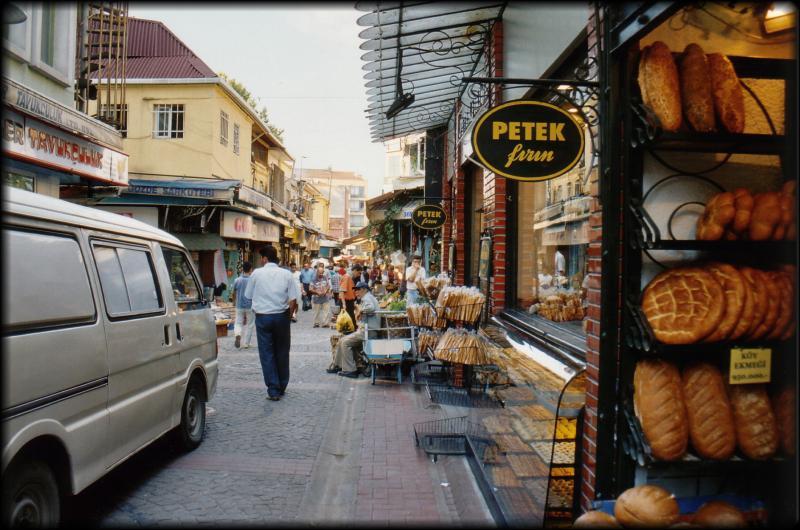
Streets in Kadikoy
Streets in Kadikoy
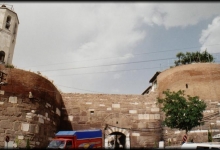
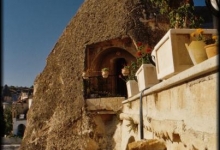
We took a ferry from Eminonu to Kadikoy to get a sampling of the Asian side of Istanbul. This is a residential and commercial area that is an easy escape from the tourist trap that is Istanbul. Frequent ferries run quickly there. There is a street market, jeweler’s stores (with reasonable prices), bakeries, traditional restaurants, etc. There is not much English spoken here, and we felt we were the first tourists they had seen in months! It was an interesting experience though, and we got some killer photos of the sunset over the Blue Mosque on the way back. We’d like to say that was planned, but, well, not so much.

Sunset over Istanbul

Post to Twitter Post to Delicious Post to Digg Post to Facebook Post to StumbleUpon

Egyptian Spice Bazaar / Misir Carsisi

Filed under: Istanbul — admin @ 6:28 pm

Misir Carsisi, or the Egyptian Spice Bazaar, is a good next destination after the Grand Bazaar. Walk through the narrow streets filled with everyday shops, and you will eventually get to the Spice Bazaar. Don’t be worried about asking anyone for directions, everyone we talked to was very helpful.My guidebook describes the Spice Bazaar as a “sensory overload” and I couldn’t agree more. There are dozens of stalls selling very fragrant spices, tea, nuts, etc. We got the feeling that this was more authentic then the Grand Bazaar (and no carpet shops!). Just outside the waterfront gate in the Spice Bazaar, Rustem Pasa Camii is a mosque worth seeing.

Post to Twitter Post to Delicious Post to Digg Post to Facebook Post to StumbleUpon

The Grand Bazaar in Istanbul – amazing shopping

Filed under: Istanbul — admin @ 6:27 pm

The Grand Bazaar has over 4000 shops, banks, mosques, police stations, fountains, and restaurants. It is the largest bazaar in the world. As you walk in on Kalpakcilarbasi Cad., you will think it’s just like a shopping mall. This is only jeweller’s row, however. Take a right and dive into the main bazaar area, with shopkeepers nipping at your heels, carpet sellers begging you to have tea with them, etc. After our experience in Moroccan medinas, this seemed pretty tame. The shopkeepers knew when to back down, and the carpet sellers, while persistent, were never threateningly so – even when we teased shopowner after shopowner as we tried to find the perfect carpet.Almost the entire bazaar is covered, so it’s a great place to go if it’s raining, or too hot. If you still get too hot, just wander into any carpet shop and they will close the door and turn on the AC, plunging the small room into subarctic temperatures in no time at all.

The shops sell almost everything. What was missing (and what I much preferred about the Moroccan medina) was the craftsmen creating the goods. Nothing is made in the bazaar, it’s all imported (sometimes even from Turkey) and just sold here.

Although all the guide books warned us about how hopelessly lost you will certainly get, we found this was totally not the case. Not only was there street signs and tourist information signs up everywhere, but the layout of the city is pretty straightforward, with many landmarks (like the old bazaar) helping to locate you when you get lost. But again, nothing (and I mean nothing) compares to the complexity and confusingness of the market in Fez!

The Grand Bazaar is an easy 10 minute walk up the tram tracks from Sultanahmet. It is another *must see* when visiting Istanbul.

Post to Twitter Post to Delicious Post to Digg Post to Facebook Post to StumbleUpon

Taksim in Istanbul

Filed under: Istanbul — admin @ 6:26 pm

Taksim Square is the location of some very upscale hotels, as well as the Ataturk Cultural Center. Istakal Cad is the main road leading off from the square, and is an upscale shopping area during the day, and a club scene at night. There is a tram that runs up and down Istakal Cad, but it’s not really faster then walking, and closes early. At the bottom of Istakal Cad is the Tunel Metro, which is the world’s oldest (and shortest) subway. It’s only got one stop, and leads straight down to the port and Galata Bridge, near the fish market.Istakal Cad at night is an amazing scene, and is not to be missed. Be careful however to plan your route back. At midnight, we found ourselves a bit stranded: The Tunel was shut down, and there didn’t seem to be an easy way to get a bus back across to sultanahmet. We should have cabbed it, but instead decided to walk. It was a long walk down some very dark streets (with some nervous moments), back to the bridge, and on to the tramway (we caught the last one!) on the other side back to Sultanahmet. It was not a walk women should take alone. So, if you’re staying in Sultanahmet, either be prepared to take a cab ride home (and potentially be ripped off), or leave early while public transportation is still feasable.

Post to Twitter Post to Delicious Post to Digg Post to Facebook Post to StumbleUpon

The Underground Cistern

Filed under: Istanbul — admin @ 6:24 pm

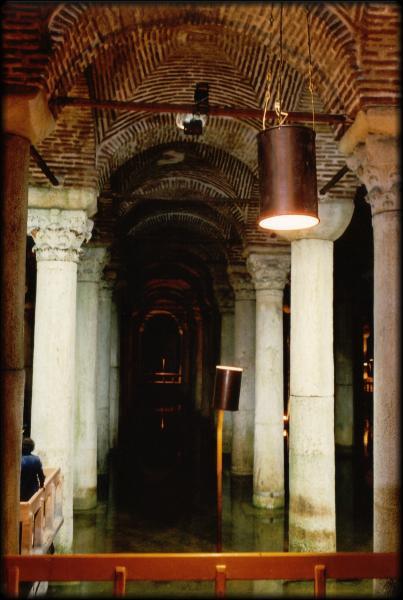
Underground Cisterns of Topkapi Palace
This underground area is located between the Aya Sofia and the Blue Mosque. It is a huge cave with 336 columns, with walkways leading you around the cave, over the water. Water drips down the roof above, and piped in classical music accompany the funky light show playing off the pillars and water. The cistern was created for the Topkapi Palace – it’s served many purposes, from moving goods to watering the lawn. Watch your step as you walk here, the ground is often wet from the dripping water. Be sure to check out the sideways and upside down Medusa Head at the end of the cavern, whose origin is still debated today.
Underground Cistern of Topkapi Palace
There is a cafe overlooking the water, where there is sometimes concerts. You exit the cavern through a set of a stairs leading to a bookstore, with some English language books.

Post to Twitter Post to Delicious Post to Digg Post to Facebook Post to StumbleUpon

Topkapi Palace, Istanbul

Filed under: Istanbul — admin @ 6:22 pm

Topkapi Palace
Topkapi Palace
Before you visit, make sure you have a high enough credit limit. The Palace is the most expensive site we visited in Turkey. Admission to all three sections of it (main entrance, Harem, and Treasury) cost about $30 in 2002. Of course we paid. I understand gouging the tourists (and applaud their understanding of capitalism for doing so – who is going to come to Istanbul and *not* see the Topkapi palace?) but what was unfair was that the prices for students and for Turks was not substantially lower – putting an amazing part of history out of the reach of a lot of people.Ok, so it’s time for a note of warning. The Palace is big. Really, really big. There is a lot to see. And it’s all very impressive. Be prepared to spend a full day here, and be well rested beforehand. Bring food and water, as there aren’t that many options inside the palace. And bring a lot of film, although they won’t let you take pictures in many places.

There are four courtyards to the palace. Only the first is accesible without a ticket, and there is really nothing to see here. The second court contains the Inner Treasury, with gold leaf ceilings and a peep-hole the Sultan used to spy on arriving VIP’s. Off this court you will also find the Imperial Kitchens, and a collection of silver and European procelain. Some of these rooms might be closed, it depends on when you go.

The third court contains the Library of Ahmet III (closed), the School fo the Expeditionary Pages (costumes and kaftans, and the first baggy trousers – isn’t it amazing how style comes full circle! ) As well, you will find the entrance to the Palace Treasury, and the Hall of the Treasury, with 37 portraits of 37 sultans. If you’re not tired and moving at about 10 sultans a minute by now, you’re doing better then we did. The treasure dormitory houses Islamic works of art, although it was closed when we were there. Or maybe we’d just had enough. The Pavillion of Holy Relics was probably beautiful, but we were really tired by then. I remember the soundproof glass cubicle from which the muezzin made the call to prayer.

The fourth courtyard has a beautiful Tulip Garden (or whatever happens ot be blooming when you’re there.) There is another Iznik (blue) tiled pavillion, the Circumcision Room (where young princes would be snipped), and more upliftingly, a beuatiful view of the Bosphorous.

Oof. I get tired and dizzy just thinking about the amount of stuff in that museum.

The Harem now requires you to take a guided tour. You must first line up to buy a ticket (it is not available in the main ticket booth). Then, you are herded through the narrow corridors of the Harem (we counted 50 tourists in a group that was only supposed to have 30) with your tour guide so far ahead you have no chance of being able to follow. Make sure you bring your own guidebook – especially if you want the time to take pictures. A security guard brings up the tail of the pack, and prods you on if you fall behind in the tour, so that you dont get mixed up in the group coming right up behind you. It wasn’t a pleasent experience, and they were making a LOT of money off it!

Inside the Harem
Inside the Harem
That being said, however, the Harem has some magnificent rooms. See our photos for some examples of the splendour that your $10 will get you.

The Treasury features the Spoonmaker’s diamond (7th largest in the world), as well as the Topkapi Dagger. The diamond is truly a sight to behold – the other displays of unthinkable wealth also make this a worthwhile experience. There are golden thrones, amazing chain mail, a diamond-encrusted anchor, and a silver hand with reportedly John the Baptist’s bones.

Post to Twitter Post to Delicious Post to Digg Post to Facebook Post to StumbleUpon

The Aya Sofia in Istanbul

Filed under: Istanbul — admin @ 6:18 pm

Aya Sofia, Istanbul
Aya Sofia, Istanbul
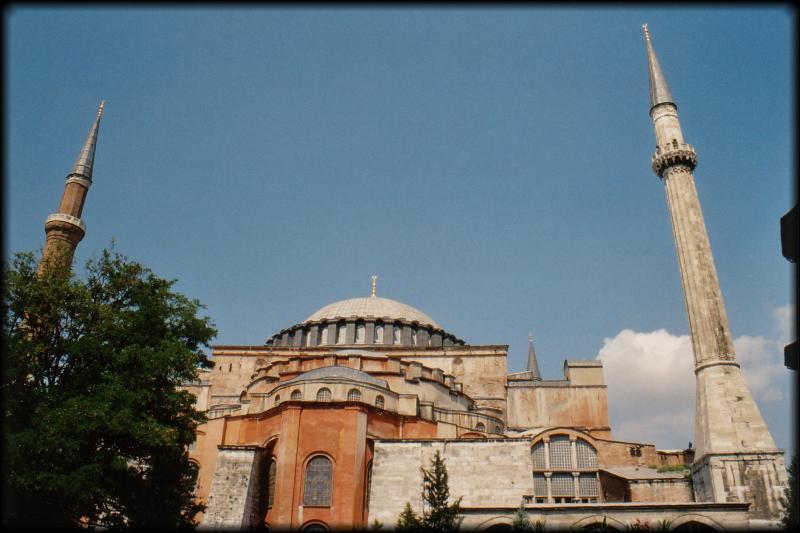
The Aya Sofia was built in 532. The exterior was painted blood red by Emporor Justinian to warn potential revolutionaries. The dome was originally a lot higher and bigger then what you see today, but an earthquake just 20 years after it’s construction destroyed it. It remained one the most beautiful churches in the world for a thousand years, when Mehmet the Conqueror tacked on a Minaret and converted it into a Mosque. Finally in 1932 Attaturk converted it into a Museum.Unfortunately when we visited (Summer 2002), the interior was undergoing massive restoration and we couldn’t see much of the roof. The size is amazing, but we were underwhelmed by the state that it was in. There’s a lot of damage here, and only a hint at the former beauty. Be sure to check out the sweating pillar. It is rumoured that if you stick your finger (and turn it around) and feel water, you will be healed. Uh huh. :)

There is a gallery on the second floor, but it’s expensive to get in ($10) and we passed.

Post to Twitter Post to Delicious Post to Digg Post to Facebook Post to StumbleUpon

The Blue Mosque in Istanbul – wow.

Filed under: Istanbul — admin @ 6:16 pm

The Blue Mosque seen from the outside
Our first stop in Istanbul was the Blue Mosque. It’s not actually blue on the outside, but the tiles inside it are. It was the Sultan Ahmet’s response to the Aya Sofia and was completed in 1617.Be sure to attend outside prayer times. Men should be wearing pants, and women should cover their head (if you don’t have a head covering, one will be provided for you). When we visited, the Mosque was packed with noisy tourists. The locals who were praying seemed oblivious to it, but I can’t help but think they get tired of it. Yes, there was a lot of tourists, but people were not making much effort to lower their voice – they just didn’t seem to care this is actually a holy place of worship, and not just another tourist site.

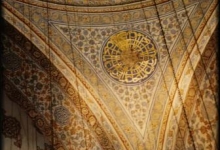
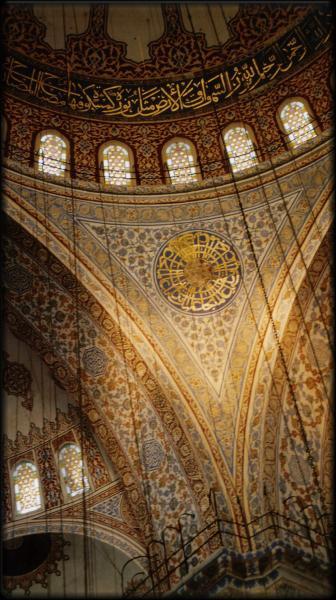
Once inside, you will be amazed by the blue tiles, and the massive chandelier hanging down from the ceiling with barely visible wires.

I

Inside the Blue Mosque
n the evening, there is a light show outside the Mosque. The show is in a different language each day. We happened to catch it in English, and left half way through, bored (as most tourists did). If you happen to be in the area, it’s worth stopping for a few minutes to look at the Mosque bathed in blue light, but the story is really not worth your time.

Post to Twitter Post to Delicious Post to Digg Post to Facebook Post to StumbleUpon

Safety in Istanbul

Filed under: Istanbul — admin @ 6:13 pm

Unfortunately, there are a few safety issues you should be aware of in Istanbul. Taxis are notorious for ripping off tourists picked up in Sultanahmet or Taksim – make sure the ‘day rate’ is set during the day (one light on the meter, not two). It’s a good idea to ask at the hotel you’re staying at where there is a reputable taxi stand.In addition, be aware that there are other tourist scams going on in night clubs. New ‘friends’ will leave an exorbitant bill. That drink might be drugged. Use common sense, it’s a very, very big city with typical big city safety problems.

Post to Twitter Post to Delicious Post to Digg Post to Facebook Post to StumbleUpon

Haci Abdullah in Taksim, Istanbul – one of the best restaurants we’ve ever eaten at

Filed under: Istanbul — admin @ 6:12 pm

We ate two dinners in Sultanhamet, and both were expensive and bland. (in addition, I believe my wife got sick from eating at one of them). The guidebook warned us about restaurants in this area, but they were close to our hotel and we were exhuasted by the end of the day. We ate one meal in Taksim, at Haci Abdullah. It was a delicious local ‘Locanta’ that has been there since 1888. It’s real Turkish food, and has a colorful display of pickles in the window. It’s at 17 Sakizagaci Cad. just off the main street in Taksim.

Post to Twitter Post to Delicious Post to Digg Post to Facebook Post to StumbleUpon

Next Page »